Wondering whether a Jefferson Park Craftsman or Spanish home is the better fit for you? In this part of Los Angeles, the answer is rarely just about square footage or finishes. You are often choosing between two very different ways a home relates to the street, the light, and its original design story. If you understand what makes each style work, and how local preservation review affects future changes, you can buy with a lot more confidence. Let’s dive in.
Why Jefferson Park Stands Out
Jefferson Park is one of Los Angeles’ notable early streetcar suburbs and is recognized by City Planning for its strong Arts and Crafts identity. The neighborhood includes many simple single-story bungalows, along with homes built from prefabricated kits or plan books. The district was adopted as a Historic Preservation Overlay Zone, or HPOZ, by City Council in 2011.
Most of Jefferson Park’s buildings were completed before 1930, with less than 10% built after that date. That matters when you shop here, because original design details and the quality of past alterations can carry as much weight as a fresh remodel. You are not just buying a house. You are buying into a neighborhood with a defined architectural pattern.
Jefferson Park also includes more than detached single-family homes. The preservation plan notes duplexes, triplexes, four-plexes, and bungalow courts designed to blend into the same low-scale residential character. That mix gives the area a layered streetscape while still feeling architecturally cohesive.
What Craftsman Homes Feel Like
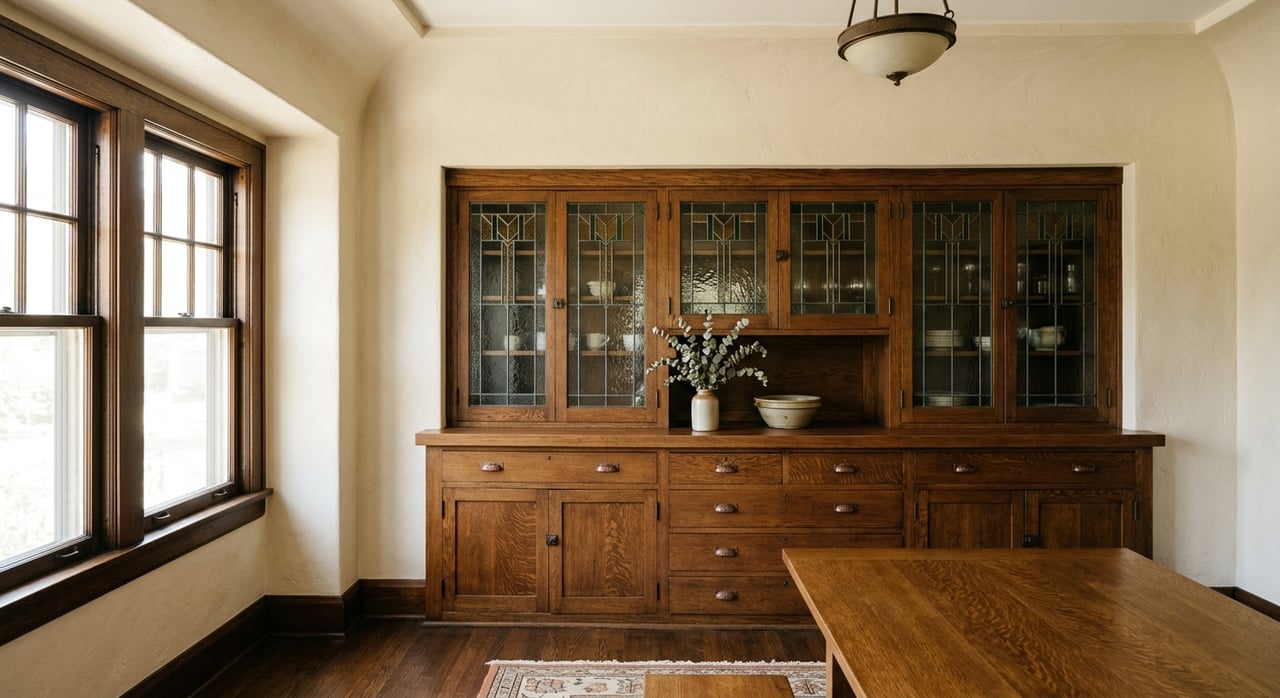
Craftsman homes in Jefferson Park tend to be low, horizontal, and bungalow-like. They often feature shallow-pitched gable roofs, deep overhangs, grouped windows, natural wood doors and interiors, and visible structural elements like beams, rafters, braces, and joints. In this neighborhood, the style is closely tied to the bungalow form, including occasional Airplane Bungalows with a small second-story pop-up.
From the street, the most recognizable details are broad gables, deep eaves, tapered or heavy porch supports, decorative brackets, masonry chimneys, and multi-pane windows. Many examples also borrow from Prairie and Mission Revival design. That mix can make one Craftsman feel simple and grounded, while another reads as more decorative.
In daily life, Craftsman homes often feel porch-centered and visually connected to the street. Their layouts can feel compact, and their charm often depends on proportion more than size. When you tour one, pay attention to whether the front porch still feels like a true part of the house rather than an afterthought.
Craftsman details worth a closer look
When you walk through a Jefferson Park Craftsman, focus on the features that help the house read as authentic:
- Original or well-matched woodwork
- Intact front porch layout and supports
- Window groupings and proportions that fit the facade
- Exposed structural details that still feel visible and intentional
- Rooflines and eaves that have not been flattened by later changes
If updates have been made, the best ones usually work with the home’s original massing and materials instead of trying to modernize away its character.
What Spanish Homes Feel Like
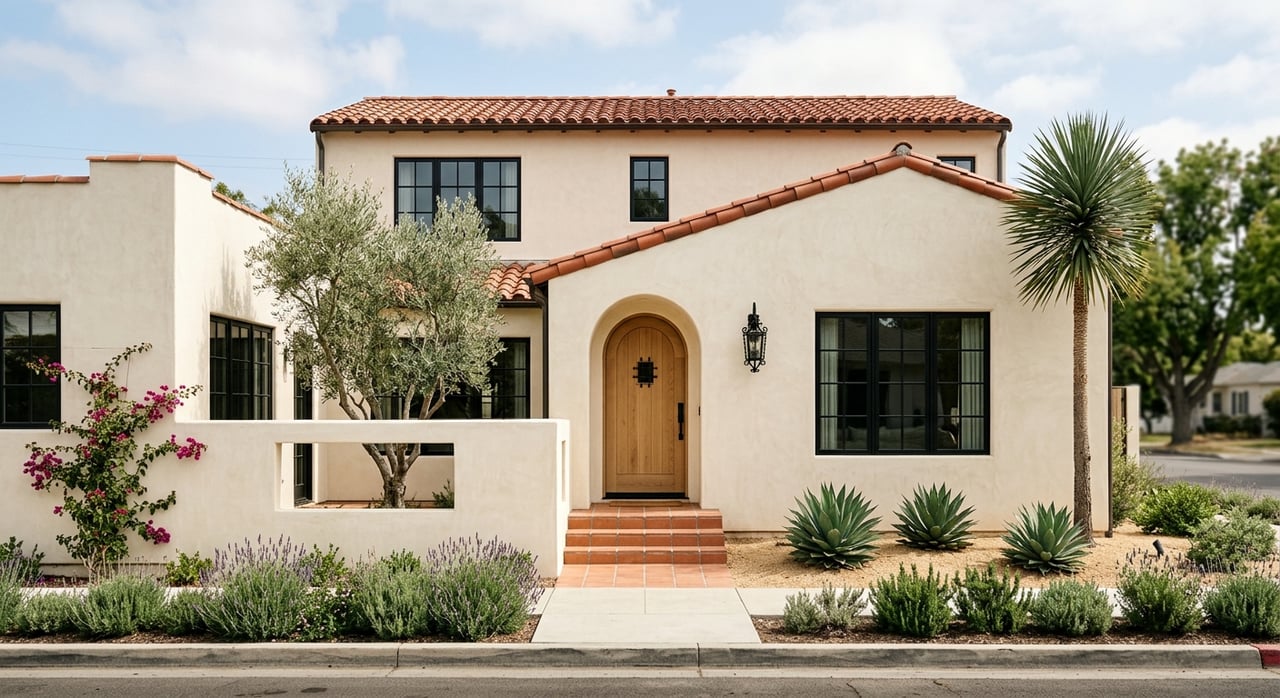
Spanish Colonial Revival homes in Jefferson Park are typically one or two stories with rectangular floor plans. Common features include low-pitched tile roofs or parapet roofs with tile coping, recessed openings, decorative ironwork, decorative plaster reliefs, white stucco or plaster walls, and arched windows or doorways.
Some homes are fairly restrained, while others include terra cotta, glazed tile, balconies, patios, and wood, wrought iron, or plaster grilles. The preservation plan also notes that these homes may blend with Mission Revival, Mediterranean Revival, Moorish Revival, Monterey Revival, or Moderne elements. In practice, you may also hear some homes described more broadly as Spanish Eclectic.
These homes often feel more formal and wall-defined than Craftsman bungalows. Arches, stucco surfaces, and patios shape how rooms connect to the outdoors. Instead of a porch-centered experience, the home may create a stronger sense of enclosure and privacy through its walls, openings, and outdoor spaces.
Spanish details worth a closer look
As you evaluate a Spanish home, look for the features that shape its overall identity:
- Original roofline and tile details
- Arched openings that still feel proportionate to the home
- Stucco or plaster finishes with consistent texture
- Decorative ironwork or plaster details that suit the period
- Patio or courtyard relationships that still feel intentional
If the home has been updated, ask yourself whether those changes respected the original openings and outdoor layout or turned the property into a more generic stucco remodel.
How to Compare Craftsman vs. Spanish
If you are deciding between the two, start with the whole house rather than a checklist of trendy upgrades. In Jefferson Park, style shows up in scale, roofline, window proportions, and how the house meets the outdoors. Those bigger elements often matter more than a new kitchen backsplash or recently redone bathroom.
A Craftsman usually appeals if you want warmth, visible craftsmanship, and a strong connection to the front porch and street. A Spanish home may feel right if you prefer arches, stucco, a more sculpted exterior, and a layout shaped by patios or more enclosed outdoor rooms. Neither is better in the abstract. The key is whether the house still reads clearly as itself.
Here is a simple way to frame the comparison:
| Style | Often Feels Like | Key Features to Evaluate |
|---|---|---|
| Craftsman | Informal, grounded, porch-centered | Porch integrity, woodwork, grouped windows, eaves, roof form |
| Spanish | Formal, sculpted, patio-oriented | Roofline, arches, stucco texture, ironwork, patio or courtyard flow |
Why HPOZ Rules Matter Before You Buy
Because Jefferson Park is an HPOZ, exterior changes can involve an added layer of review. According to the Jefferson Park FAQ, the HPOZ applies to the exterior of the home, exterior accessory structures like garages, and significant landscaping projects. Even some work that does not require permits, including exterior paint color changes, may still need HPOZ review.
Interior work is not covered by the HPOZ, although city permits may still be required for items like drywall, electrical, and plumbing work. That distinction is important if you are planning updates. A house that seems easy to personalize on the inside may still require more thought and review for exterior changes.
Projects are reviewed by the Office of Historic Resources in the Department of City Planning, and in some cases by the Jefferson Park HPOZ Board. Once an application is complete, conforming work is generally subject to a 21-day review period. If you are hoping to move fast on exterior improvements after closing, build that timeline into your planning.
Smart Due Diligence Before You Make an Offer
When you buy in a historic district, due diligence should go beyond the usual questions about age and condition. You also want to understand how prior work has affected the home’s architectural integrity. In Jefferson Park, that can shape both your enjoyment of the property and your future renovation options.
Before you write an offer, try to answer a few key questions:
- Is the home contributing or non-contributing within the HPOZ?
- Have earlier owners replaced porches, windows, doors, or roof materials?
- Were exterior changes approved when they were made?
- If the home was modernized, did the updates preserve the original massing and openings?
- Do the current exterior materials and details still fit the style of the house?
These questions can help you spot the difference between a thoughtful restoration, a respectful update, and a remodel that erased too much of what made the home special.
What Thoughtful Renovation Looks Like
For character homes, the strongest renovations usually keep the house legible as a period property. The rehabilitation standards referenced in the research emphasize retaining historic character, avoiding removal of distinctive materials or character-defining spaces, and repairing original features rather than replacing them when possible. When replacement is necessary, the goal is to match the old work in design, color, texture, and, where possible, materials.
That does not mean a home has to feel frozen in time. It means the most successful updates tend to respect the original design logic. In a Craftsman, that might mean preserving woodwork, porch structure, and window rhythm. In a Spanish home, it might mean protecting arches, roof form, stucco character, and the relationship between indoor rooms and patio space.
The Bottom Line for Buyers
In Jefferson Park, buying a Craftsman or Spanish home is really about learning to read architecture as a whole. Because so much of the neighborhood predates 1930 and falls within a local preservation overlay, prior alterations often matter as much as surface-level polish. A beautiful house is one thing. A beautiful house that still makes architectural sense is something else entirely.
If you are shopping for a character home here, it helps to look past cosmetics and focus on what gives the property its identity. Rooflines, porches, patios, windows, materials, and massing tell you a lot about whether a home has been cared for in a way that honors its original design. That kind of perspective can help you make a smarter purchase and see long-term value more clearly.
If you want guidance on finding and evaluating a design-driven home in Jefferson Park, Silke Fernald can help you navigate the details with a sharp eye for architecture and a practical approach to the transaction.
FAQs
What makes Jefferson Park homes architecturally distinctive?
- Jefferson Park is known for its early streetcar suburb history, strong Arts and Crafts identity, and large collection of homes built before 1930, including Craftsman bungalows and Spanish Colonial Revival properties.
What should buyers look for in a Jefferson Park Craftsman home?
- Focus on the overall integrity of the house, including porch layout, woodwork, roof form, grouped windows, and whether updates still fit the original design.
What should buyers look for in a Jefferson Park Spanish home?
- Pay close attention to the roofline, arches, stucco texture, decorative ironwork, and whether the home’s patio or courtyard relationship still feels intact.
What does the Jefferson Park HPOZ cover for homeowners?
- The HPOZ covers the home’s exterior, exterior accessory structures such as garages, and significant landscaping projects, and some non-permitted exterior work may still need review.
What is the Jefferson Park HPOZ review timeline for exterior projects?
- According to the neighborhood FAQ, conforming work is generally subject to a 21-day review period once the application is complete.
Why do prior alterations matter when buying in Jefferson Park?
- Because many homes are historic and locally protected, earlier changes to porches, windows, doors, roof materials, and overall massing can affect both character and future renovation flexibility.